For Spanish Version click here
With 160 Senior School pupils from 15 schools, The Grange School hosted its second Model United Nations Conference this August. But what exactly is MUN, where does it come from, and what does this experience offer our pupils? We invite our whole community to discover more about this Senior School opportunity and the skills and experiences it offers pupils as they progress through The Grange.
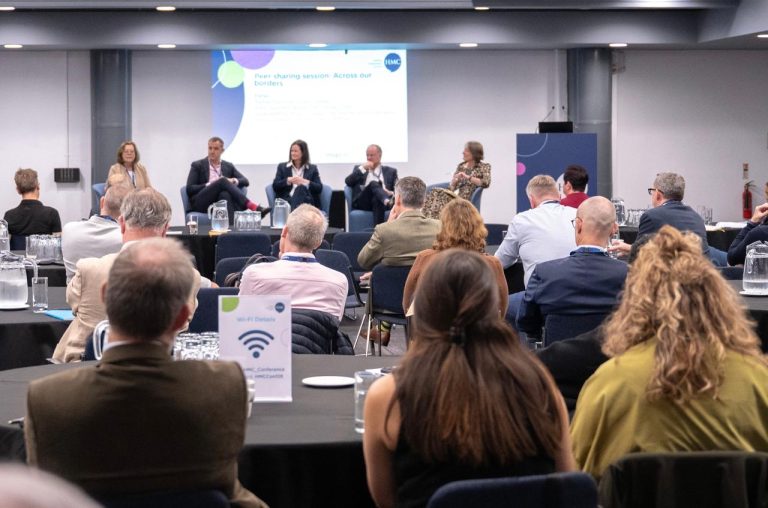
On Friday, 21st and Saturday, 22nd August, The Grange School proudly hosted Gryphon MUN 2026, our second Model United Nations (MUN) Conference, welcoming 160 Senior School pupils from 15 schools.
For many families, MUN may still be relatively unfamiliar. Model United Nations is an educational simulation of the United Nations in which pupils take on the role of delegates representing different countries. Rather than speaking from their own perspective, they research the country they have been assigned, consider its position on global issues and work with other delegates to debate, negotiate and seek possible solutions.
Preparation begins well before the conference itself. Delegates are assigned countries and committees in advance and prepare by researching their topics and attending training workshops. Once the conference begins, they participate in formal committee sessions, debate real-world challenges, negotiate with other countries and work together to draft resolutions. This year, delegates addressed global issues including gender equality, peace and security, sustainable development and health.
Through this process, pupils put into practice skills such as public speaking, critical thinking, research, negotiation, leadership and teamwork. They are challenged to listen to different perspectives, engage in respectful dialogue and work towards common ground, while developing a deeper understanding of international affairs, diplomacy and global citizenship.
While MUN is an experience available at Senior School, we wanted to share it with our whole community so that families can learn more about the opportunities pupils can look forward to as they progress through The Grange. Experiences such as MUN give pupils the chance to explore new interests, challenge themselves and discover different ways to learn beyond the classroom.

From the League of Nations to a global educational experience
MUN has a history that stretches back almost a century. Its origins can be traced to pupil-led simulations of the League of Nations – the organisation that preceded the United Nations – held in the United States during the 1920s. One of the earliest recorded examples was the Model Assembly of the League of Nations at Syracuse University in 1927, created to engage young people in discussion about international affairs.
As the international landscape changed during and after the Second World War, these simulations evolved too. Between 1943 and 1944, Model United Nations simulations began replacing Model League of Nations events at institutions including Hamilton College and Bryn Mawr College, reflecting the transition towards the creation of the United Nations in 1945. One of the earliest recorded Model UN conferences was held at Swarthmore College in 1947, bringing together more than 150 participants from different colleges.
The movement continued to grow. Harvard Model United Nations was founded in 1953 and became one of the oldest and most influential MUN simulations in the world, while Harvard WorldMUN, established in 1991, helped expand the model internationally by taking the experience to different host cities around the globe. MUN also reached school pupils: The Hague International Model United Nations was established in 1968 and today brings together thousands of participants.
What began as an opportunity for young people to explore international affairs has therefore developed into a global educational experience, giving generations of pupils the chance to understand diplomacy not only by studying it, but by experiencing its challenges for themselves.
MUN in Chile
In Chile, Model United Nations has a more recent history, but participation among schools and universities has continued to grow.
In 2019, pupils from Liceo N°7 took part in a Model UN session at the United Nations headquarters in New York through an initiative supported by IMUNA, UNESCO, the Ministerio de Educación and private foundations. At university level, MONUCH – Modelo de Naciones Unidas de la Universidad de Chile – was founded in 2018, reflecting a growing interest in creating spaces for young people to engage with international affairs and global citizenship.
More recently, in 2025, delegates from Colegio Cumbres represented Chile at the National High School Model United Nations (NHSMUN) in New York, another example of the increasing participation of Chilean schools in internationally recognised MUN experiences.


The Grange and its own MUN journey
The Grange also has its own story with Model United Nations – one that began before Gryphon MUN.
In March 2020, the School was preparing to host its first MUN conference, GraMUN. Everything was ready for Friday, 13th and Saturday, 14th March, but as concern about COVID-19 grew and participating schools began to withdraw, the difficult decision was taken to cancel the conference on Thursday, 12th March. Two days later, the Chilean Government announced an indefinite quarantine. What was intended to become a milestone in the School’s MUN journey instead became an unexpected lesson in resilience and adaptation.
The photograph of our 2020 MUN Team included in this report is therefore much more than a memory. It represents the pupils and teachers who were ready to begin a journey that circumstances forced them to postpone. Rebuilding after the pandemic took time, but the enthusiasm for MUN remained. In 2023 and 2024, The Grange hosted its “Good COP, Bad COP” simulations, giving pupils the opportunity to participate in structured debates inspired by international diplomatic processes. Gryphon MUN subsequently emerged as the School’s own conference and returned in 2026 for its second edition, this time involving significantly more pupils and teachers than the previous year.
How do pupils take part?
Gryphon MUN is open to invited Senior School pupils aged 14 to 18. Schools select their delegates, who are then assigned countries and committees in advance.
From that point, preparation becomes an important part of the experience. Pupils research their assigned topics and positions and participate in training workshops so that they arrive at the conference ready to debate, negotiate and collaborate.
MUN is therefore much more than the two days of the conference itself. It asks pupils to understand complex global issues, practise respectful dialogue, consider perspectives that may be very different from their own and experience the challenges of multilateral cooperation. In doing so, it develops skills that can extend well beyond school: leadership, teamwork, communication, critical thinking and an awareness of their responsibilities as global citizens.


In their own words
Perhaps the best way to understand the impact of MUN is to hear from those who have experienced and supported its development at The Grange.
Franco Gherardelli, 4° EM pupil and Secretary-General of Gryphon MUN 2026, reflects:
“MUN has been far more than an extracurricular activity for me; it has been a fundamental space for my personal and academic growth. I have learnt to understand debate not merely as a tool for argumentation, but as a genuine means of building agreements and finding common ground with those who think differently. It has taught me that it is not solely about being right or wrong, but about listening respectfully, engaging in open dialogue, and seeking solutions collaboratively. During these nearly two years of participating in the school’s MUN, I have faced numerous challenges that have driven me to grow and to push beyond my own limits. Every difficulty has been an opportunity to learn, to strengthen my communication skills, and to develop a deeper sense of responsibility and commitment. I am profoundly grateful to have found this space, which has enabled me not only to develop as a participant, but also to assume a greater role of leadership and responsibility as Secretary-General. Together with Francisco Soto, we have worked with dedication, passion, and constant effort, with the firm conviction that we can ensure this conference is a success. Today, at the School, we celebrate the outcome of this collective endeavour, and I feel immense pride in what we have achieved. This experience has left an indelible mark on me, and I am convinced that the lessons and values MUN has imparted will continue to accompany me throughout my personal and professional journey.”
Jon Kearns, Head of English, reflects on how far the programme has come:
“The Grange’s MUN team has grown and developed exponentially over the past three years. From starting out by attending two conferences in 2024, we then attended four conferences in 2025 and hosted our own conference as well. This year, we have attended another four conferences and held a significantly larger version of Gryphon MUN, inviting many more students from other schools to participate and offering a choice of eight different committees. To witness the dedication and hard work that our students have put into making this event a success has been immensely rewarding. Our aim has always been to form pupils that are trustworthy and will be useful to society, and hosting the Gryphon MUN has contributed to attaining this goal.”
Jon Kearns
Head of English
Ciaran O’Rourke, Assistant Head Academic Senior School, shares his perspective on the educational value of the experience:
“My first experience of an MUN conference was at the University of Chicago in 2017, where I brought a delegation from abroad. As both an educator and a student, I had always been active in student government, debate, and as a Prefect, but this was very different: I was immediately struck by how engaging and transformative MUN can be. It was eye-opening to see how quickly pupils grew in confidence and gained new perspectives. MUN offers pupils a unique opportunity to step into the shoes of world leaders, debate pressing global issues, and experience first-hand the complexity of international relations. Beyond sharpening public speaking and critical thinking, it fosters teamwork, leadership, and a deeper awareness of current events — skills and insights that extend far beyond their school days. We are thrilled to be hosting MUN at The Grange and to see it continue to grow.”
Ciaran O’Rourke
Assistant Head Academic
Senior School
A special conclusion to Gryphon MUN 2026
The two-day conference concluded on Saturday with a Closing Ceremony and a very special guest. We were delighted to welcome Constanza Santa Maria, renowned Chilean journalist and television presenter, who spoke to pupils about the importance of journalism in today’s world, particularly in the context of the growing influence of social media.
Her participation provided a fitting conclusion to an experience centred on understanding the world around us, engaging critically with information and learning to listen to and communicate different perspectives.
Gryphon MUN is ultimately much more than learning how the United Nations works. It is a space where pupils can find their voice, broaden their horizons, explore real-world challenges and discover that different perspectives can come together in the search for solutions. It encourages confidence, critical thinking, diplomacy, leadership and teamwork – skills and experiences that can accompany them well beyond their years at School.
For our younger pupils and their families, Gryphon MUN also offers a glimpse of one of the many experiences that await them as they progress through The Grange. Perhaps, in a few years’ time, some of them will be the delegates, chairs and pupil leaders bringing the next Gryphon MUN to life.
Participating schools included British Royal School, Chartwell International School, Colegio Cumbres, Colegio Pedro de Valdivia, Colegio San Ignacio El Bosque, CPV International School, Craighouse School, Lincoln International Academy, Monte Tabor y Nazaret, Nido de Aguilas, The Mayflower School, St. George’s College, The Southern Cross School, Wenlock School and The Grange School.